

Why freedom must be guarded, not assumed
“Stand fast therefore in the liberty by which Christ has made us free, and do not be entangled again with a yoke of bondage.” — Galatians 5:1
Deliverance is not the end of a battle—it is the beginning of stewardship. Many believers experience genuine freedom, only to later find old patterns attempting to return. This does not mean deliverance failed; it means freedom must be maintained, enforced, and protected.
Understand That Freedom Is a Legal State
Deliverance removes what had legal access, but legal ground can be re-opened if boundaries are not maintained. Scripture shows that unclean spirits seek re-entry when a house is left unguarded (Matthew 12:43–45). Freedom remains intact when authority is actively exercised.
Replace What Was Removed
Freedom cannot exist in a vacuum. Whatever was cast out must be replaced with truth, discipline, and alignment.
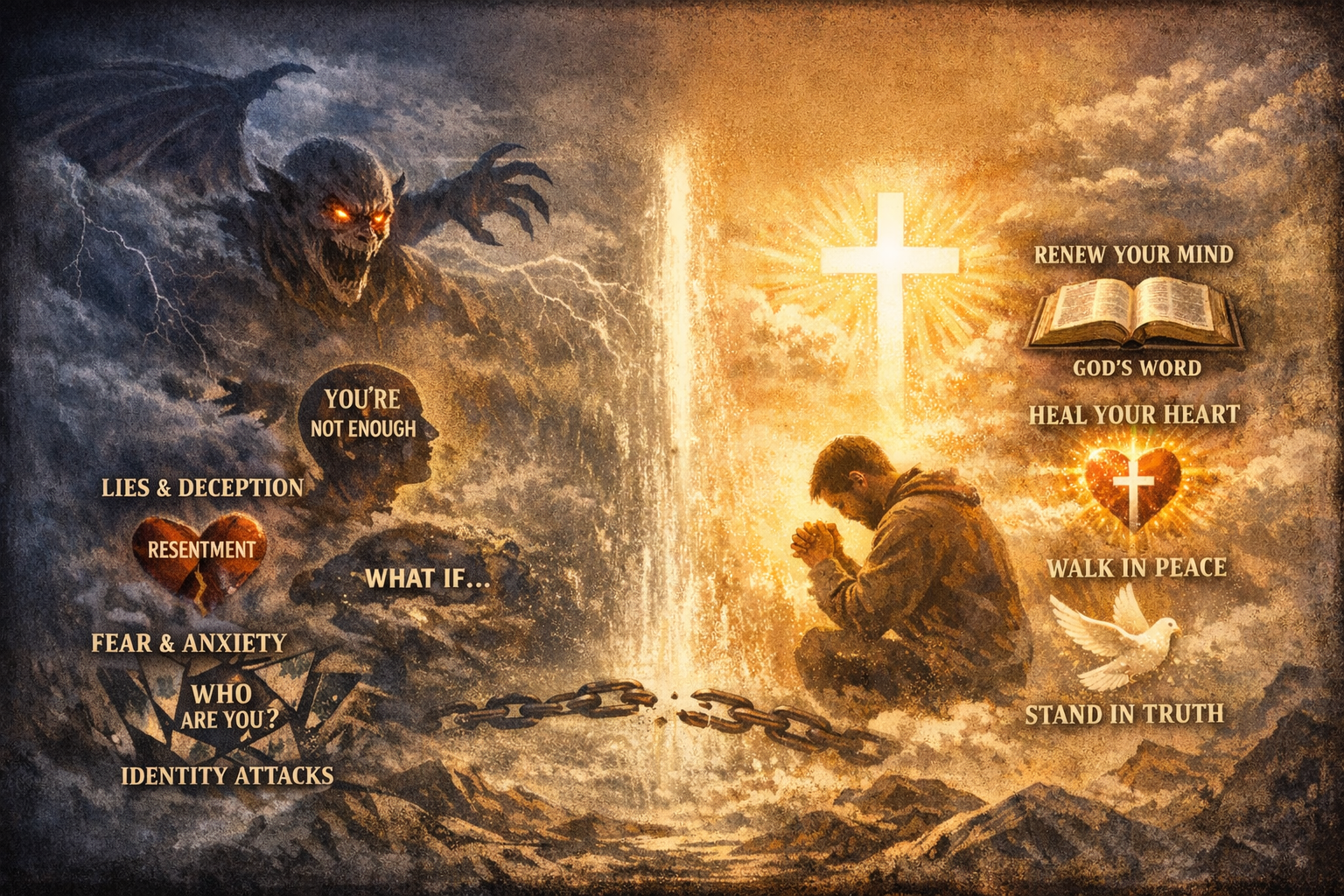
Therefore, when deliverance removes a spirit, mindset, or pattern, it leaves behind space that must be intentionally filled, because as noted before, freedom cannot exist in a vacuum. Whatever once influenced your thoughts, emotions, or decisions must be replaced with truth, discipline, and the presence of God, or the enemy will attempt to return through familiarity. Scripture warns that when a house is swept but left empty, former occupants seek re-entry (Matthew 12:43–45). Replacing what was removed means establishing new spiritual habits, renewing the mind with God’s Word, cultivating worship, and forming godly responses where old reactions once lived. Deliverance breaks the hold, but replacement secures the freedom.
- Replace fear with faith
- Replace trauma with truth
- Replace sin patterns with righteousness
- Replace ungodly altars with worship
Without replacement, old influences attempt to reclaim space.
Maintain Consistent Spiritual Disciplines
Consistency is not ritual—it is reinforcement.
Consistent spiritual disciplines are how freedom is enforced over time, not just experienced in a moment. Prayer keeps your spirit alert, Scripture renews your thinking, worship establishes a righteous altar, and fasting sharpens spiritual sensitivity. These disciplines are not religious routines; they are protective measures that strengthen spiritual authority and prevent old patterns from regaining influence. Inconsistency creates gaps where resistance can return, but faithfulness builds stability. When spiritual disciplines are maintained daily, freedom becomes sustained, authority remains active, and growth continues without regression.
- Daily prayer strengthens spiritual authority
- Scripture renews the mind and dismantles old thinking
- Worship establishes a righteous altar
- Fasting sharpens discernment and discipline
The enemy targets consistency because consistency builds unshakable ground.
Guard Agreements and Boundaries
Deliverance breaks bondage, but agreements invite it back.
Freedom is often lost not through open rebellion, but through subtle agreements and weakened boundaries. After deliverance, the enemy seeks access through unresolved unforgiveness, fear-based decisions, trauma responses, or old coping mechanisms that once felt familiar. Every agreement—spoken or unspoken—either reinforces freedom or reopens legal ground. Guarding agreements means continually choosing truth over emotion, obedience over comfort, and discernment over impulse. Strong boundaries protect what God has restored, ensuring that deliverance remains permanent and that past influences no longer have permission to operate.
- Unforgiveness
- Fear-based decisions
- Trauma responses
- Control patterns
Every agreement must be continually surrendered to God. Freedom is maintained by choosing truth over survival habits.
Stay Accountable and Connected
Isolation weakens deliverance. God designed freedom to be sustained in community. Covering, accountability, and spiritual alignment help guard against subtle re-entry points.
Accountability and connection are vital safeguards after deliverance because isolation weakens discernment and strength. God designed freedom to be maintained within healthy spiritual relationships where truth, encouragement, and correction can flow. Staying accountable means allowing trusted, spiritually mature believers or leaders to walk with you, pray with you, and lovingly challenge you when old patterns try to resurface. Staying connected keeps your faith anchored, prevents secrecy, and reinforces alignment. When believers remain covered and engaged in godly community, freedom is protected, growth is sustained, and spiritual attacks lose their advantage.
Isolation weakens deliverance because it removes spiritual covering, accountability, and reinforcement, leaving freedom vulnerable to subtle attack. When a person withdraws, discernment becomes clouded, self-talk replaces truth, and old thought patterns regain influence without challenge. Scripture warns that one who isolates themselves seeks their own desire and breaks out against sound wisdom (Proverbs 18:1). The enemy often pushes isolation after deliverance because separation creates space for fear, discouragement, and temptation to grow unchecked. Deliverance is sustained in community, where prayer, truth, and support continually reinforce freedom and prevent regression.
Closing Prayer:
Father,
I thank You for the freedom You have established in my life.
I choose today to guard what You have delivered me from.
I renounce every old agreement and declare my life filled with Your Spirit.
I stand firm in liberty and refuse every attempt of re-entanglement.
In Jesus’ name, Amen.
Deliverance Declarations:
I remain free because I remain aligned.
I enforce my freedom daily by the authority of Christ.
Every attempt of re-entry is denied and resisted.
My mind, spirit, and emotions are filled with truth.


Leave a Reply