

“When the enemy comes in like a flood, the Spirit of the Lord will lift up a standard against him.”
— Isaiah 59:19
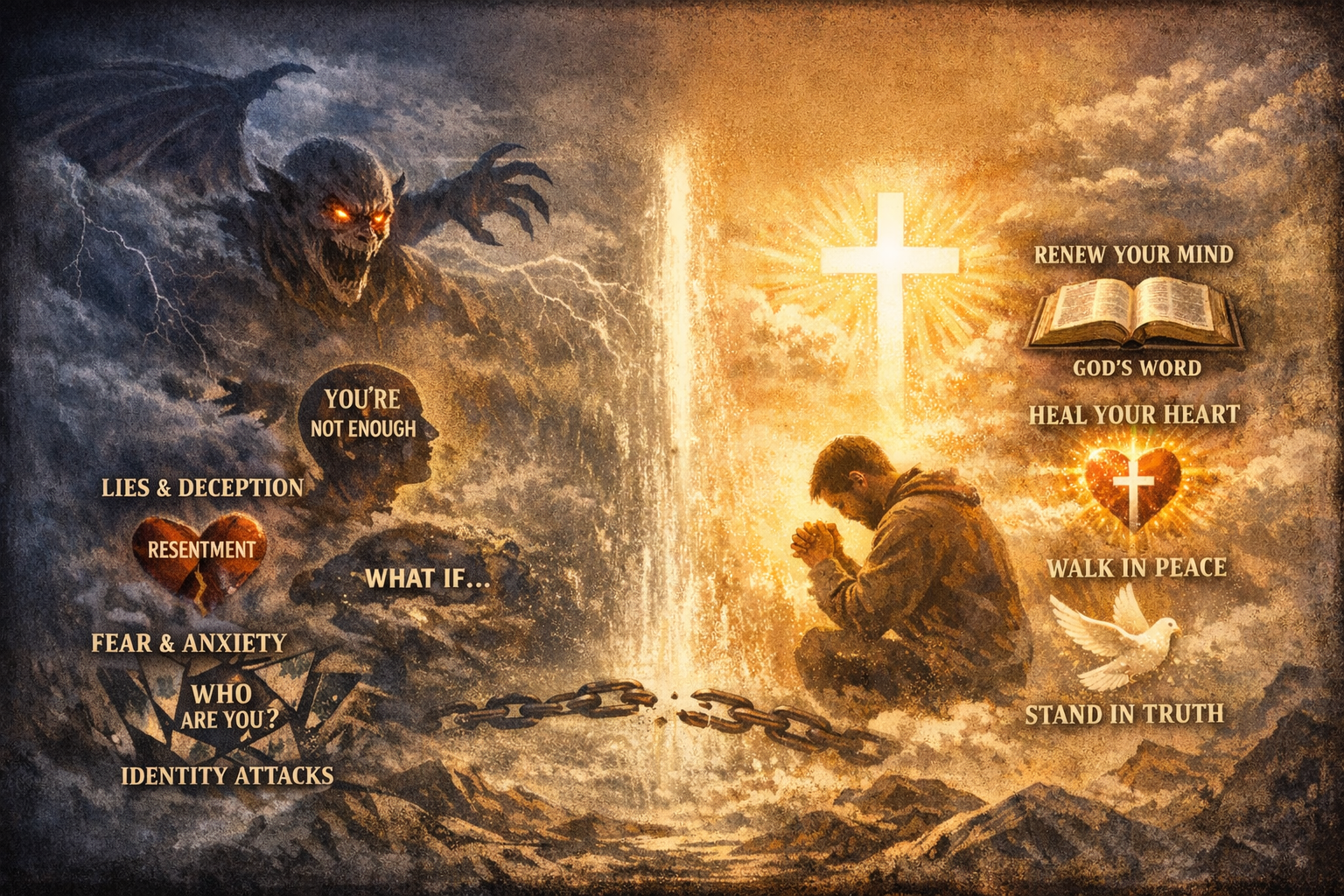
Many believers know the frustration of getting close—almost free, almost healed, almost established—only to watch momentum collapse at the final stage. These are not coincidences. Near-breakthrough failure is often the clearest evidence of spiritual resistance, not personal inadequacy.
Breakthroughs are rarely attacked at the beginning. They are contested at the edge of manifestation.
What Is a Near-Breakthrough?
A near-breakthrough is a season where:
- Progress accelerates
- Doors begin to open
- Hope rises
- Change feels imminent
Then suddenly:
- Resistance intensifies
- Old patterns resurface
- Delay appears without cause
- Fatigue or confusion sets in
The issue is not that God withdrew—it is that opposition increased.
Why Resistance Intensifies Near Victory
The enemy does not fight potential—he fights movement.
Scripture reveals this pattern clearly:
- Pharaoh increased labor when Israel was about to be released
- Haman acted when Mordecai’s honor was near
- Satan tempted Jesus after forty days of fasting
Near-breakthrough moments signal imminent loss of enemy control, so resistance escalates.
Common Spiritual Reasons Near-Breakthroughs Fail
1. An Active Root Was Never Removed
Behavior changed, but the root remained.
Near-breakthroughs often fail because an active root was never removed, even though outward progress was made. Behavior may change, prayer may intensify, and momentum may build, but if the underlying spiritual root—such as unforgiveness, fear, trauma-based agreements, or generational iniquity—remains intact, it continues to feed resistance beneath the surface. When pressure increases near manifestation, that root is activated and reasserts control, causing collapse at the final stage. Scripture makes clear that lasting freedom requires uprooting, not trimming; until what God did not plant is fully removed, breakthroughs can approach but will not stabilize or complete.
“Every plant which My heavenly Father has not planted will be uprooted.” — Matthew 15:13
2. An Ungodly Altar Is Still Speaking
Progress threatens the altar, so it speaks louder.
Near-breakthroughs fail when an ungodly altar is still speaking because that altar continues to release a competing testimony against progress and fulfillment. Even when prayer, effort, and obedience increase, an active altar—established through past agreements, sin, trauma, or generational patterns—retains legal voice in the spiritual realm. As breakthrough approaches, the altar intensifies its resistance, demanding attention or sacrifice to maintain influence. The result is sudden opposition, delay, or collapse, not because destiny is revoked, but because the altar’s voice has not yet been silenced and replaced with a righteous one aligned with Christ.
3. Fear Triggers Control
Fear triggers control because when uncertainty increases, the human instinct is to protect rather than trust. At the edge of breakthrough, fear often resurfaces—fear of loss, change, failure, or even success—and control becomes a coping mechanism to regain a sense of safety. This shift subtly replaces faith with self-management, causing people to interfere with timing, force outcomes, or retreat into familiar patterns. Instead of surrendering at the moment God requires trust, control reasserts authority, stalling progress and reopening cycles. What feels like wisdom in fear is often the very thing that delays manifestation.
At the edge of change, fear resurfaces and control re-enters, stalling surrender.
4. Fatigue Weakens Enforcement
Weariness causes people to stop enforcing authority just before resistance breaks.
Fatigue weakens enforcement because spiritual authority requires consistent vigilance, and weariness diminishes both focus and persistence. Even when breakthrough is imminent, prolonged effort, prayer, or spiritual engagement can lead to physical, emotional, or mental exhaustion. Fatigue reduces the believer’s ability to maintain boundaries, enforce spiritual legalities, and resist the enemy’s interference. As a result, resistance that could have been overcome gains ground, and near-breakthroughs falter. Scripture shows that perseverance—standing firm until the end—is key, because breakthrough is often secured not at the start, but at the point where persistence meets opposition.
Breakthrough Requires Enforcement, Not Just Faith
Faith believes.
Authority enforces.
Many near-breakthroughs fail because believers expect momentum to carry them through instead of standing firm until resistance collapses.
“Having done all… stand.” — Ephesians 6:13
Standing is not passive—it is legal persistence.
Why the Enemy Attacks Consistency, Not Desire
Desire threatens nothing.
Consistency dismantles structures.
The enemy attacks consistency because consistent faith, obedience, and alignment with God dismantle his influence over time. While sporadic prayer or temporary effort may be tolerated, steady spiritual discipline builds momentum, authority, and legal ground in the heavenly realm. Consistency enforces the Word, strengthens altars aligned with God, and disrupts cycles of resistance. Scripture shows that repeated obedience and persistence provoke breakthrough, so the enemy targets rhythm, endurance, and daily habits in an attempt to interrupt the process before victory fully manifests. Interrupting consistency is his primary tactic to delay fulfillment without challenging calling directly.
Near-breakthrough seasons demand:
- Continued obedience
- Guarded speech
- Sustained prayer
- Refusal to retreat emotionally
The enemy aims to interrupt rhythm, not erase calling.
Biblical Insight: Delay Is Not Denial
We have often heard the saying ‘delay is not denial. It is true. Daniel’s answer was released on day one—but arrived on day twenty-one. He was not denied what he requested. Resistance delayed manifestation, but not heaven’s decision.
“From the first day… your words were heard.” — Daniel 10:12
Near-breakthrough failure often means heaven has already answered, but the believer disengaged before arrival.
How to Secure the Breakthrough
1. Identify What Resurfaced
Old emotions, temptations, or patterns often signal final resistance.
2. Reinforce the Altar
Increase worship, not striving.
3. Renounce Fear-Based Decisions
Do not make permanent choices in temporary pressure.
4. Stay Consistent
Consistency outlasts resistance.
8. What Happens When You Push Through
When resistance breaks:
- Peace stabilizes
- Progress becomes sustainable
- Cycles collapse
- Authority increases
Breakthrough is not fragile—it is structural once resistance is defeated.
Closing Prayer…
Father,
We ask for discernment at the edge of victory.
Give us strength to stand, wisdom to resist fear, and clarity to enforce what You have already spoken.
We refuse to retreat when resistance rises.
We declare that near-breakthroughs will become full manifestation.
In Jesus’ name, Amen.
Deliverance Declarations:
Declare aloud:
- I will not retreat at the edge of breakthrough.
- Every last-minute resistance is broken in Jesus’ name.
- I remain consistent until victory manifests.
- Fear will not govern my decisions.
- What God has started in me will be completed.



Leave a Reply