

“Can the Ethiopian change his skin or the leopard its spots? Then may you also do good who are accustomed to do evil.” — Jeremiah 13:23
Some struggles are not seasonal—they are cyclical.
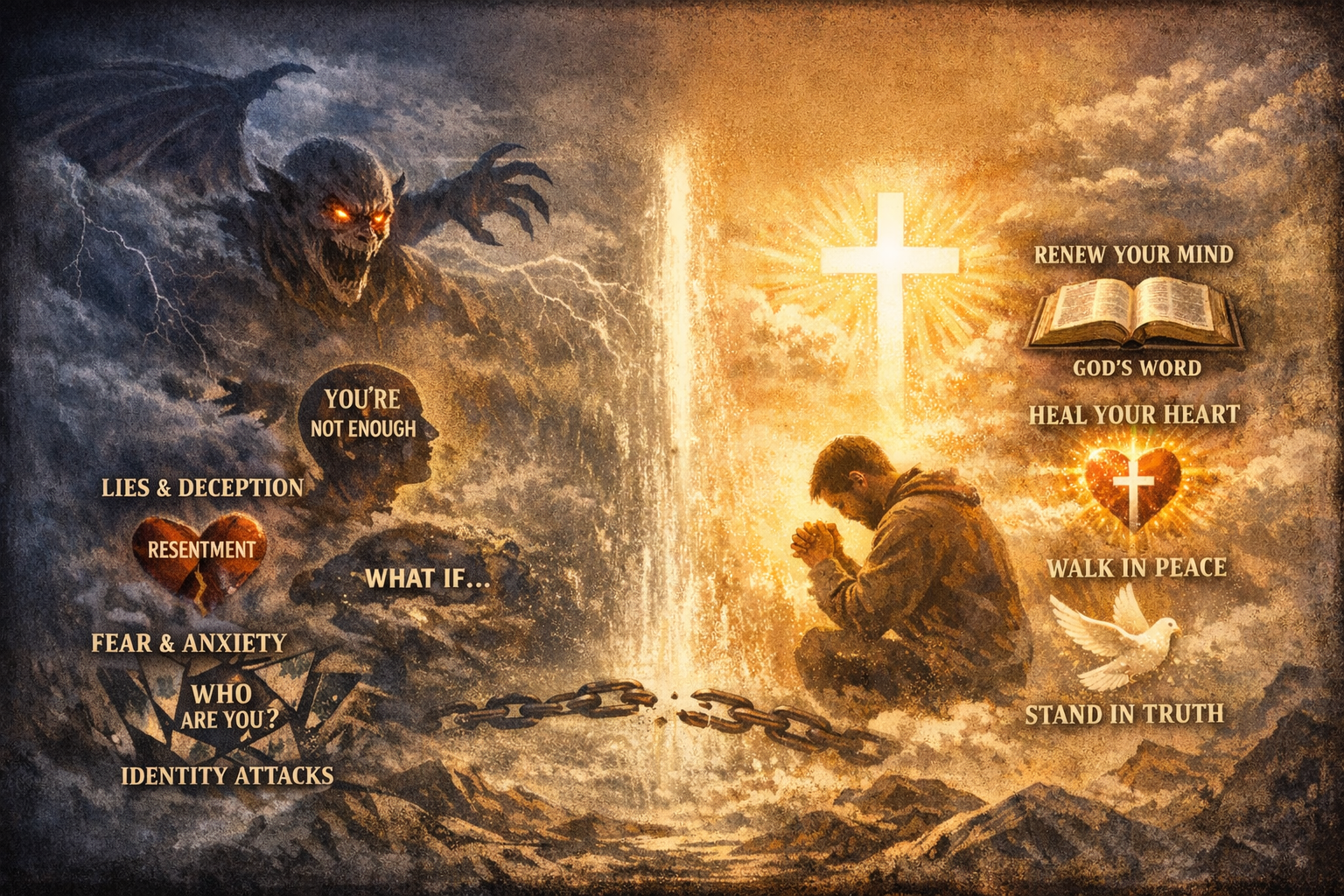
When patterns repeat despite prayer, effort, and intention, Scripture points us deeper than behavior. Cycles persist because a spiritual root remains active.
What Is a Spiritual Cycle?
A spiritual cycle is a repeated pattern with a spiritual origin, not merely a habit or circumstance.
Cycles often appear as:
- Repeated relationship breakdowns
- Ongoing financial instability
- Chronic delay or near-breakthroughs
- Persistent emotional heaviness
- Same battles resurfacing in new forms
Cycles do not survive on effort—they survive on roots.
Why Cycles Persist Despite Prayer
Prayer invites God’s intervention, but cycles often remain because:
- The root was never addressed
- Legal ground was never removed
- Agreements were never broken
“Every plant which My heavenly Father has not planted will be uprooted.” — Matthew 15:13
Uprooting requires identification and authority, not repetition.
Biblical Examples of Cycles
- Israel’s wilderness cycle (Numbers–Judges)
- Samson’s repeated compromise (Judges 16)
- Generational rebellion in Israel’s kings
Cycles continue until confronted.
Common Spiritual Roots Behind Cycles
1. Generational Iniquity
Inherited patterns that require intentional renunciation.
Generational iniquity refers to spiritual patterns, tendencies, or consequences that are passed down through family lines when unresolved sin, trauma, or rebellion creates ongoing influence across generations. Scripture shows that while each person is responsible for their own choices, unaddressed iniquity can shape environments, behaviors, and vulnerabilities that repeat unless intentionally confronted. These patterns often manifest as recurring struggles, cycles of delay, or familiar battles appearing in different forms within a family line. Generational iniquity does not override personal responsibility or God’s grace, but it does require awareness, repentance, and renunciation so that what was inherited does not continue to speak or govern future generations.
2. Unforgiveness
Bitterness anchors repetition.
Unforgiveness is a common spiritual root behind cycles because it creates an ongoing agreement with offense that keeps the past active in the present. When forgiveness is withheld, the heart remains tied to the wound, allowing bitterness, resentment, or silent anger to shape reactions, decisions, and relationships repeatedly. Scripture warns that unforgiveness gives the enemy access, not because the pain was justified, but because refusal to release it sustains spiritual ground for repetition. As long as the offense remains unresolved, similar situations continue to surface in different forms, reinforcing the cycle. Forgiveness does not deny the harm—it closes the door that allows the pattern to continue.
3. Trauma-Based Agreements
Survival decisions made in pain that later govern behavior.
Trauma-based agreements form when a person makes internal decisions in moments of pain, fear, or survival that later govern behavior and outcomes. These agreements often sound like silent vows—“I’ll never trust again,” “I have to stay in control,” “I must protect myself at all costs”—and they create spiritual and emotional frameworks that persist long after the trauma has passed. While these decisions once felt necessary for survival, they can become roots that sustain cycles of isolation, delay, broken relationships, or resistance to change. Until trauma-based agreements are identified, renounced, and replaced with God’s truth, they continue to influence destiny by enforcing protection rather than freedom and control rather than trust.
4. Fear and Control
Fear creates cycles of self-protection and stagnation.
Fear and control often function together as a spiritual root behind cycles because fear demands control as a form of false security. When fear governs decisions, control becomes a coping mechanism—managing outcomes, people, or circumstances to avoid pain, loss, or uncertainty. This creates repetitive patterns where progress stalls, relationships strain, and peace remains elusive, not because change is impossible, but because trust has been replaced with self-preservation. Scripture shows that fear constricts movement, while control resists surrender, keeping the same battles active in different forms. Until fear is confronted and control is released to God, cycles continue to repeat under the illusion of safety rather than true freedom.
Signs a Root Is Still Active
- You change behavior but not outcome
- You recognize the pattern but feel powerless
- Breakthrough starts but never completes
- Resistance appears at the same point every time
Symptoms reveal structure, not coincidence.
Breaking Cycles Biblically
1. Revelation
You cannot break what you refuse to see.
2. Repentance
Not shame—realignment.
3. Renunciation
Verbal withdrawal from old agreements.
4. Replacement
A new righteous pattern must be established.
When a Cycle Breaks
When a root is removed:
- Peace replaces striving
- Progress becomes sustainable
- Resistance weakens
- Movement accelerates
Freedom is not fragile—it is structural.
Closing Prayer…
Father,
Reveal every root sustaining cycles in my life.
I renounce what You did not plant and receive Your truth in its place.
By the authority of Jesus Christ, I declare these cycles broken permanently.
I step into new patterns aligned with Your will.
In Jesus’ name, Amen.
Deliverance Declarations
My future is no longer governed by my past.
Every ungodly cycle in my life is broken now.
I uproot every spiritual root not planted by God.
I walk in freedom, consistency, and progress.
Old patterns have no authority over me.



Leave a Reply